Friday, 4 November 2016

Growing Manuka Trees from Cuttings

Spring growth manuka

It's spring. Our big manuka trees are shooting forth, creating new leaves on their tips. It must be time to take cuttings.

The first batch of cuttings we did are doing amazingly well. They are 18 months old, over a metre tall, and flowering. Already!
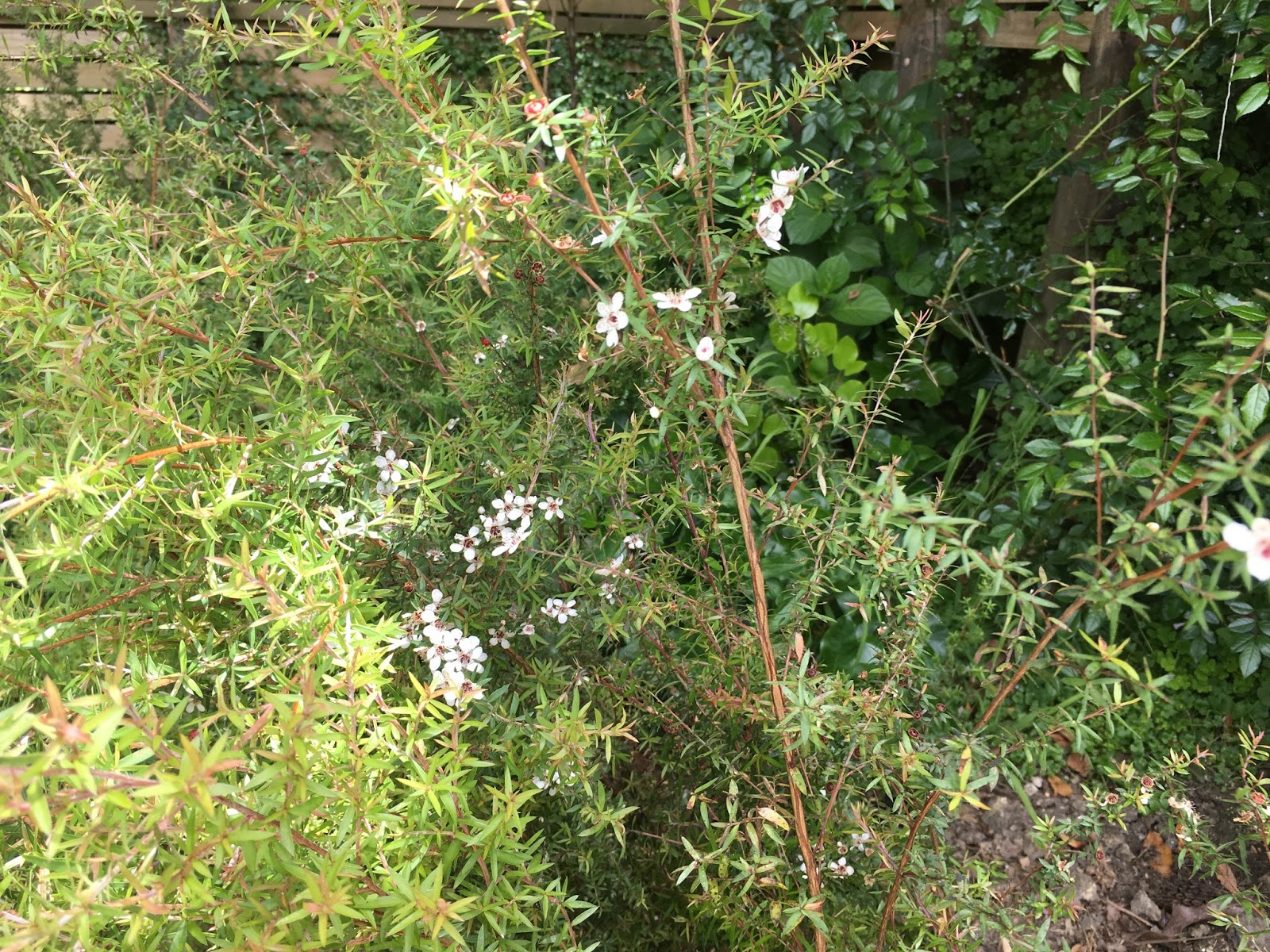
Flowering manuka

So I thought I would make some more. We've done a lot from seeds, but if cuttings grow faster, then that would be a good thing to do too.

Softwood v Semi-hardwood cuttings


At this time of year the manuka trees are just starting to grow and produce new growth tips. Cuttings taken from brand new tips are called softwood cuttings. Because the wood is 'soft' I guess.

The last lot of cuttings I took, in autumn, were from semi-hardwood cuttings - so the wood is firmer and the new shoots are tougher.

The other type of cuttings that you can take are hardwood cuttings, which are taken in late autumn and winter, and when the plants are dormant. This type is usually used for deciduous trees, so not appropriate here.

Both softwood and semi-hardwood are supposed to be good for manuka.


Taking manuka cuttings


How to take cuttings


1. Cut off a tip from a branch.
2. Strip off the bottom leaves.
3. Dip in root-forming hormone.
4. Put into a pot of potting mix and firm down.
5. Water lightly.


Newly potted manuka cuttings

And here they are. Looking good!

But a week later, this is what they look like:


Eek! Not so good huh?

So, what went wrong?

There are 3 things that might have gone wrong.

1. Cuttings need to be fresh off the tree


With these ones the trees were far away from my potting station. It took a couple of hours before I got to turning them into proper cuttings and planting them.

2. Cuttings in autumn are best


These were very soft wood cuttings. The manuka trees I took these from were only just beginning to grow for the season.

I think that spring is best for planting seeds, and autumn is best for making cuttings. The ones I did in autumn were just so much more robust, not all flimsy and floppy and soft.

3. Do not over-water


Its possible they have had too much water. 

It would be ideal to mist them until they strike. But the Department of Weather has not obliged, and it has been raining. Not intensively, but not a fine mist either.

The best way to do cuttings at home


So the best way to do cuttings in your backyard is to do them in autumn. Leave the tricky aspects of cuttings in spring to the commercials. Instead, spring is a great time to sow seeds.

Always something to do...

To get a free pictorial step-by-step guide to Growing Manuka from Seeds, sign up here. And check out Business of Bees for in-depth downloadable courses on establishing your manuka plantation with bees in mind.

Post script:

I tried again, after a bit or research and remembering, and it worked much better. Just needs a 'spring way'. Check out the post here


Wednesday, 26 October 2016

Growing Manuka from Seeds - Free Information

There is a honey rush on!


Do you want to be part of it?

Better plant some manuka trees then.

Download your free Pictorial Step-by-Step Guide to Growing Manuka Trees from Seeds. Free!

And there is lots more information on Business of Bees, including comprehensive e-courses in planning, growing and planting manuka trees for honey production.

Tuesday, 11 October 2016

18 tips for making $1mill in your first year beekeeping

Can you really make $1mill in your first year beekeeping?

A row of beehives waiting for the honey flow


We have a honey rush on. Everyone is jumping on the bee bandwagon hoping to make millions from manuka honey. Are they nuts, or on to something? Let's do the numbers:

Let's say you get 1000 hives in your first year. Each hive makes maybe 25kg of honey. Manuka honey sells for much more than pasture honey these days, so let's say $40/kg. So that's 1000 hives x 25kg honey x $40/kg = $1mill.

Well, that works. What could go wrong? Or maybe, a better question, what do you need to do right to succeed? 

Here are 18 tips to help you avoid some of the common pitfalls as a new beekeeper wanting to get in on the honey rush. For more information on each item, read the full post on Business of Bees.

Making 1000 hives

1. Bees are excellent at growing. When a hive is big enough, you can split it, and make 2 hives. But 2 split hives are way less productive honey-wise, than one big hive. So it is a trade off - lots of hives or lots of honey.

2. Hives that are too small tend to die. Don't split too much.

3. Splitting requires new queens. Queens are in short supply (lots of beekeepers doing just this, and splitting like mad to create lots of hives). Have a strategy for this.

4. 1000 new hives will require 1000 hive lids and 1000 hive floors and maybe 3000 hive boxes, and 30,000+ frames. And the boxes need to be ordered, and assembled, and painted, and stored.

5. 1000 hives will need 2-3 beekeepers. Who know what they are doing. Not your sister and cousin. Or not immediately, they can come in later when there is training sorted.

6. Your beekeepers need to be dedicated, hard working and smart. There is no free lunch here. Same goes for any other hangers-on. Everyone needs to be earning their keep.

7. Bees die. Varroa, AFB, starvation, swarming. Plenty of things to do all year to keep your bees alive. Find out about this, and know what you are doing. And then do it.

8. Where are these bees going to go over autumn and winter? Have you got sufficient space for them, and food?

Making 25kg honey / hive

9. See 1. Too much splitting means you are growing bees, but not honey. You may actually make 0kg honey / hive. Make sure you are choosing this deliberately, if this is your strategy, or that you have your balance of hives:honey sorted to keep your business going.

10. Where are these 1000 hives going to live? The stocking rate is 2 hives / ha. So that's 500 ha.

11. You will likely need other farmers' land. And agreements for hive placement. This means $, not a jar of honey.

12. Don't crowd your hives. Bees starve if there are too many bees and not enough flowers.

Making $40/kg

13. $40/kg only happens with manuka honey. So...put your bees in manuka. Otherwise you might get $6/kg.

14. A small patch of manuka will not cut it. You need at least 20ha, 50ha is better, so the bees have enough to forage on.

15. High DHA manuka nectar is the way to go. The science is still new on this, so it's a bit of 'watch this space', but something to keep in the back of your mind.

16. Bees don't like manuka all that much. They would much prefer to go to that lovely clover. You need some tricks and techniques to help them do what you want, which is feast exclusively on manuka.

17. Manuka only flowers for 6 weeks. Where are they going to forage for the rest of the year? Got a plan?

And my last, and most important, tip

18. Be passionate about bees. Work hard. Employ others who will work hard. Be smart about what you do. Constantly monitor, measure, tweak and think about how things are going. Just like any other business really.

There might be a honey rush on, but this is not a free-lunch opportunity. Only the best will make it through the long run.

Read the full post on Business of Bees

Thursday, 22 September 2016

Sticky bee droppings on washing

Bees in early spring


If you were a bee in early spring, what do you think would be most on your mind?

Here's a clue: you have been inside for a couple of months. There's not been much to do except cleaning up the queen and larvae's excrement. The weather's been terrible, and you haven't been able to get out.

Oh, and the toilet is outside.

So, the first fine day, everyone rushes the gates and goes out for a poop. They will do their business a bit away from the hive, but not far, say up to 500m.

Bees typically fly in a set flight path between the hive and their current food source. So, if you have your washing hanging out, it's a beautiful day in spring, you have a beehive nearby, and you happen to be on a bee highway...your washing will be covered in sticky yellow bee poop.

So at this point you have a choice:
- to get the sticky yellow stuff out of your washing you will need to soak it for an hour, then wash again.
- if its on your house, then give it a good soak with the hose, and keep it wet for 20 minutes, then wash with soapy water or blast with a pressure hose. That's the theory.
- hang your washing under cover
- hang your washing out at night only - bees don't fly at night, right? - if this works for you let me know, and I'll bring my washing around too.
- talk nicely to the beekeeper and she might give you some honey

But at least you can console yourself with the thought that bees pooing outside the hive is an excellent sign that all is well, and they are healthy. It's the ones pooing inside the hive that is a problem.

For more on this check out Business of Bees

And if you would like to get your free copy of a Pictorial Step by Step Guide to Growing Manuka Trees from Seeds sign up here.

Leave me a comment - do you have a better way to deal with sticky yellow bee poop?

Wednesday, 14 September 2016

Feeding sugar to bees in spring

Feeding bees syrup


One of our most important bee management activities happens right now, in early spring.

We feed the bees sugar syrup.

In Auckland our honey flow - the time of the nectar being ripe on the trees for the bees to collect and turn into honey - starts in about November. So, to make maximum honey, we need maximum bees ready to take advantage of that.

Now from egg to nectar collector (a forager) takes about 6 weeks. So about 6 weeks before honey flow, the bees need to decide to start on the baby production. I mentioned the pollen from gorse in the last blog post but they also need nectar, or nectar substitute.

Which is sugar syrup. You can see in the picture it looks like the syrup is being poured directly into the hive. But there is a feeder box sitting inside the hive beside the brood frames, so the bees can stay in and eat. And also so no foreigners come to dinner.

For some more of the in-depth gumpf on this visit Business of Bees

And for a free downloadable Pictorial Step by Step Guide to Growing Manuka Trees from Seeds sign up here.

Don't forget to share this with your friends.

Wednesday, 7 September 2016

Spring pollen for bees from gorse

Gorse in bloom


The bees are up and about now the weather has warmed up. And the queen is awake and started laying eggs again. These eggs will grow into brood, or bee babies, and then hatch out as bees.

But the nurse bees need to keep feeding the brood for them to keep on growing. So the foraging bees need to start hustling.

There isn't much to eat at this time of year though, most plants have not started flowering yet. Luckily we have gorse, that invasive introduced pest plant, that flowers bang on now.

Basically bees collect 2 types of things. Nectar is carbs, and is used to create wax and honey. Pollen is protein and essential nutrients and is required to feed the brood. Gorse produces excellent pollen.

So all these lovely gorse bushes that we chopped down so heartily pre-bees are going to be excellent food for our newly emerging bees. Although when I took this picture I didn't see a single bee visiting. I'm wondering if the flowers weren't quite open enough. I might need to revisit, test out that theory.

For more of the science-y bits around this check out Business of Bees blog post.

And sign up to collect your free downloadable Pictorial Step by Step Guide to Growing Manuka Trees from Seeds. Free! Did I say?

Leave me a comment too, below.

Thursday, 1 September 2016

September is Bee Awareness Month

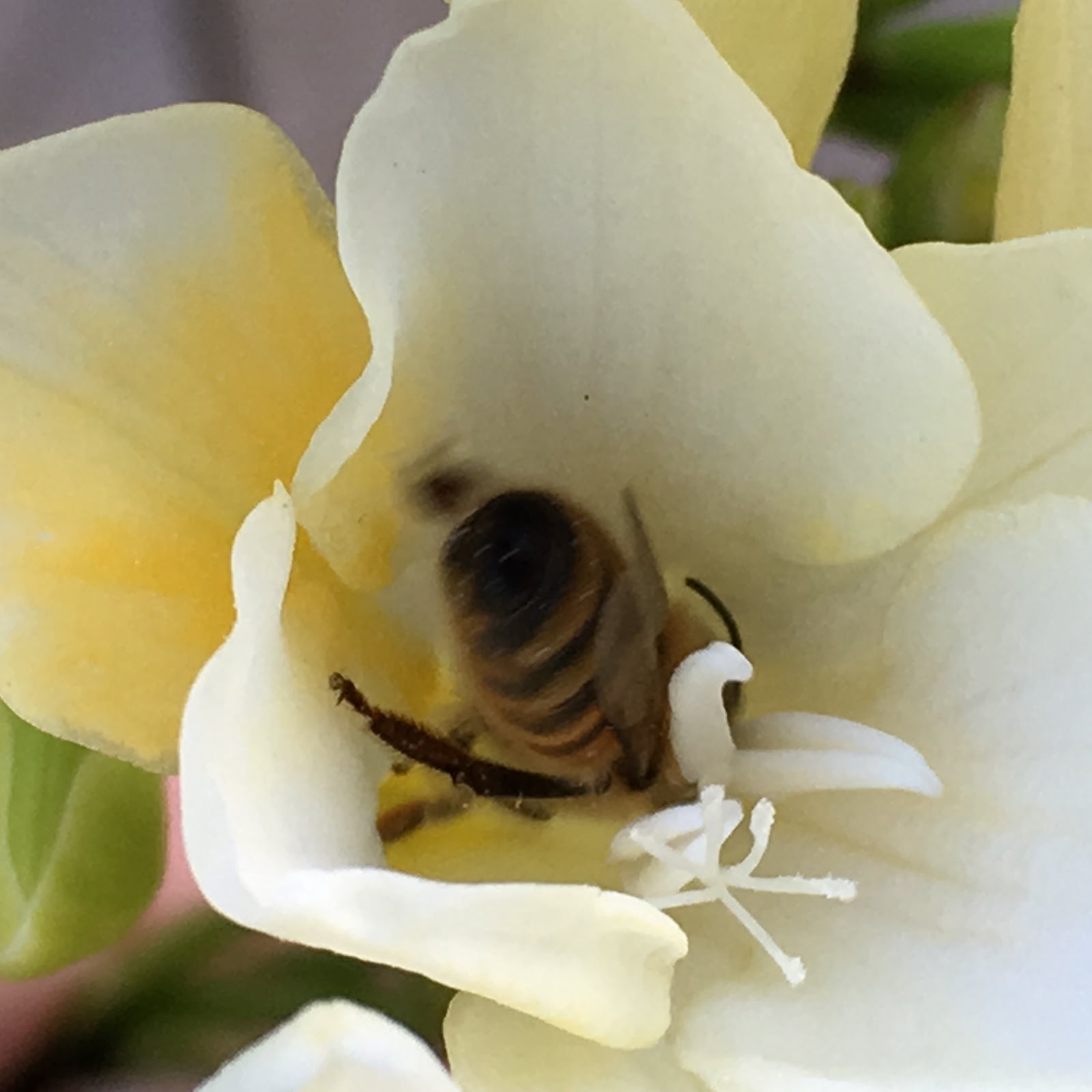
A bee in winter in a freesia flower


Here it is, already September. Are we getting old or what?

But, good news! Its officially spring.

And it's also the start of Bee Awareness Month. The good folk at NZ Gardener have set up 2 things for us to do this year.

You can register your bee friendly plantings of this spring on their Plan Bee map. The map looks like this. And for bonus points you get to name your place - so here's the chance to live in 'Queen Bee Karen's Palace' or whatever it is that takes your fancy. Can't ask for better than that!

But wait, that's not all...this year also they have created a Great Kiwi Bee Count. This is a joint programme between NZ Gardener and the scientists at Plant and Food Research.

Here's my early bee above. She was out in early August (so doesn't qualify for the count), but was quite persistent in supping away, even though I was holding this bunch of picked flowers.

I'm guessing that all you beekeepers out there don't need to do a bee count. Might not be quite what the scientists had in mind.

Leave me a comment below, and tell me what you want to know and I'll see what I can do for you. And remember to check out Business of Bees