Sunday, 28 February 2016

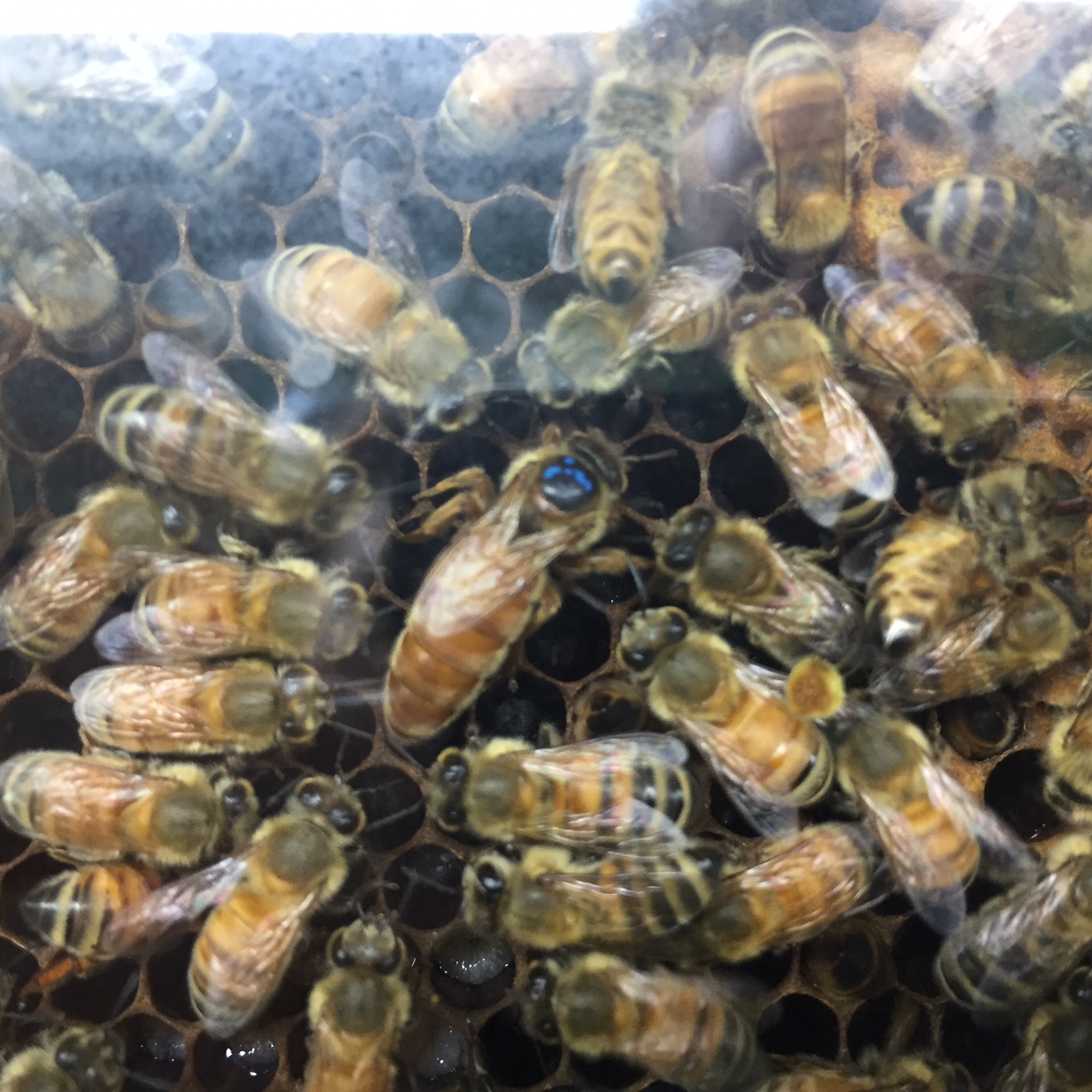
Queen Bee

Here's a busy queen, and all her helpers. Isn't she just a beauty?


She also lives in Karamea, in my brother's hive.


Thursday, 25 February 2016

How to Buy Bee Hives

How do you start owning bees? 

Well, on the weekend we met some lovely people who were interested in getting started with some bee hives. We'd been down to New Plymouth for the weekend. Admired the new Len Lye bridge, below. Spot Mount Taranaki (hint: the bridge is perfectly aligned).


Admired the rugged west coast beaches.


Discovered all manner of groovy places and food spots. Had a lovely trip back through the Forgotten World Highway. Just got out of that when, poof! Radiator hose split. And, in the manner of the country, discovered some lovely people who were all keen on offering all sorts of useful help - off to find the local mechanic, water for the radiator, a bed to stay in should that be required. Just amazing and great.

And...in the serendipitousness of things, they were interested in getting started with bees. So here are our tips on how to buy bees and what to do next.

1. The best time to buy is probably now, or soonish. Don't wait till spring, because you will have all winter to get the hang of it and build up your hive, so you can get more honey.

2. TradeMe is a good place to buy hives. 

3. You should make sure the seller is DECA registered, which everyone is required to be by law. This means they will be abiding by the law for important things like American Foul Brood treatment and varroa. And your bees should then be pest free.

4. Inspect before you commit. This is the tricky bit. You are looking to see if the bees are healthy - they should smell good, look fully formed - no stunted wings etc, be busy. But if you have never seen inside a hive before, how will you know? Take someone experienced with you. See 5.

5. Join a local bee keeping group, there are quite a few around. So I googled 'Auckland beekeepers' and came up with this one Auckland BeeKeepers Club but you could do the same with your area.

6. I follow Backyard BeeKeeping NZ facebook group, always useful advice for newbies, and you can post a 'Help!' too whenever you are stuck. Both these types of groups might be a source of someone to come with you to inspect.

7. Carry your bees home in the dark, they will all be snug in the hive then. Block up the entrance way before you leave. Tie the hive on well to your trailer. Don't put your hive inside your car! Bees do escape.

8. When you get home, put your bees somewhere where they will get early morning sun, out of the wind if possible, and is flat and easy to access - you want to be able to check on them often.

9. Register yourself with DECA, and do the training.

10. Then you need to buy a book on beekeeping for beginners and get going!
Tuesday, 9 February 2016

Karamea Bees


These are my brother's and friend's bees, in Karamea in the west coast. Thriving like crazy!


Thursday, 4 February 2016

Manuka Trees for Bees


We've been experimenting a lot this year with growing food trees for the bees. The most obvious plant to grow, in NZ anyway, is manuka - Leptospermum scoparium. Manuka honey has many healing and health benefits, is the most delicious I think, and also is highly sought after (so sells for a premium).

I've posted before about our efforts Growing Manuka Trees from seeds and cuttings  but here is an update with what we have learned since then.

1. Cuttings go much faster than seeds

2. Cuttings are best in spring to get maximum growth in one seasonal cycle, although our autumn ones worked pretty well - they're the big ones at the back (conveniently obscured by the nikau frond)

3. Cuttings take a bit of effort at the beginning

4. Seeds are really easy to begin

5. Seeds need warm for them to germinate

6. Seeds are more effort in the long run because you have to pot up a few times, and a bit annoying (yaarrrrgh!) when there are differing sizes of seedlings in the seed trays. Thanks to Bee Grandad for his patience with all the big and little ones.

7. We've moved our baby plants to a semi shaded area - previously they were in full sun, and they started getting a bit stressed as summer progressed. They're doing much better now.

8. You don't want to put them in too big a pot, we've gone up to PB2s as ideal, before you plant - too big a hole to dig then

9. When planting we think we will dig a small but deep hole using a auger. Note I haven't tried this yet, and its looking like this first experimental batch will be about 3000 seedlings, so it might get old really quickly. Dipping boxes might seem like a walk in the park compared to this! Also, exactly WHERE is a moot point at this time, 3000 trees needs some serious real estate. Might have to jam them in to Bee Man's already full bush. Don't really want to leave the big ones another year because then they will be stressed. Or me, one or the other...

10. Planting really needs to happen as soon as it starts to be consistently wet in autumn I think, which will give them maybe 9 months before they hit the hot summer. Typically you would be planting somewhere where there is no watering supply.


Manuka is well adapted to being off on its own, colonising the bare and barren soil, it is a classic nursery crop - nursery for all those other baby trees that happen afterwards I guess. But in the wild the plants start as seed then the tiniest seedlings, so sticking plants straight in needs some strategising. Their lovely fine needle leaves fall on the ground and create excellent mulch, so they enrich the soil for the next generation of forest giants that come along naturally. Or so I read, and it seems plausible.


Tuesday, 2 February 2016

Washboarding bees

What does it mean when bees rock back and forth at the front of the hive?


One of our hives has had a lot of bees washboarding on the front. All the other hives don't display this behaviour, just this one. And nobody has quite figured out why bees do this.

It just shows you that nature still has it all over us mere humans. Rather beautiful though, don't you think?

(The noise in the background is the ute running, not bees humming. Drat!)


Monday, 25 January 2016

A Yurt House

One of our bee hosts lives in a yurt! 

It has fabric walls and roof outside, and a timber lattice arrangement on the inside of the walls. The walls are insulated between, and it has a fire inside, and bedroom and kitchen and the full works. Louise says it is cosy all year round, maybe just a bit chilly in the middle of the night in the middle of winter when the fire dies down, but isn't everywhere cold then?


This one wouldn't fit a large family, but is perfect for one or 2 people. They come in a variety of sizes, although no McMansions I would think.

Isn't it just the coolest?


And, one of her chickens. Which has its own regular chicken house, not a yurt.


Bee people are universally interesting, in my experience. I wonder why?

Saturday, 16 January 2016

Beekeeping statistics

Bee Labour Boy has been furiously making beehive boxes. And they are making quite a stack in the garage.


And the drying rack of completed and dipped boxes is getting a bit low.


So I volunteered to help dip them. Yippee, I thought, a fun adventure.
WRONG! It was quite good fun for the first 10 minutes, then it became deeply un-glamorous (yeah, I know, the other bee boys have been making millions of these, what is my problem?). 


So I compiled some statistics, to help time pass:
Boxes in a batch: 6
Total number of batches: 28
Total number of boxes dipped: 168
Time taken: 3 hours

Steps taken for each batch, garage to dipping vat (me): 150 steps
Steps taken for each batch, dipping vat to rack (a bit of me): 840 steps

Screws per box: 20
Total screws (used by Bee Labour Boy): 3360

Squares of chocolate eaten: 18 (2 people)
Water drunk: 2L
Weight each box, undipped: 4Kg
1 calorie = 10 steps carrying box
Calories per hour: 300 (yep, not quite the choc intake)

Plus the oil dipper Bee Man and his efforts. But he is practiced, having done heaps before, so that doesn't really count, does it?


Here they are, drying on the rack.


And look at all this space, ready for Bee Labour Boy to get cracking on making more.